
When Repairs Go Wrong in Older Buildings

A surveyor’s insight into period properties
Over the last couple of weeks we have carried out a number of RICS Level 3 Building Surveys across Hertfordshire and Cambridgeshire.
What stood out was not a lack of maintenance.
In fact, quite the opposite.
Both properties had clearly been worked on over the years. Repairs had been carried out, improvements had been attempted, and at first glance, everything appeared relatively well presented.
However, once we looked more closely, a different picture began to emerge.
In each case, modern materials had been introduced into buildings that were never designed to accommodate them. And rather than solving problems, these repairs were beginning to cause new ones.
For obvious reasons, we will not identify the properties. But the issues we identified are extremely common, and if you are considering purchasing an older home, they are worth understanding.
The fundamental issue: older buildings need to breathe
Most older properties were not built with cavities, membranes or modern damp proofing systems.
Instead, they manage moisture in a completely different way.
They rely on:
Breathable materials such as lime mortar and lime render
Natural airflow through the structure
The ability for moisture to evaporate rather than be sealed in
As noted during one of the inspections, the construction relies on breathable materials to allow moisture to evaporate naturally.
This is not a flaw.
It is how these buildings have survived for hundreds of years.
The problems begin when this balance is disrupted.
Spray foam insulation: the hidden risk in the roof
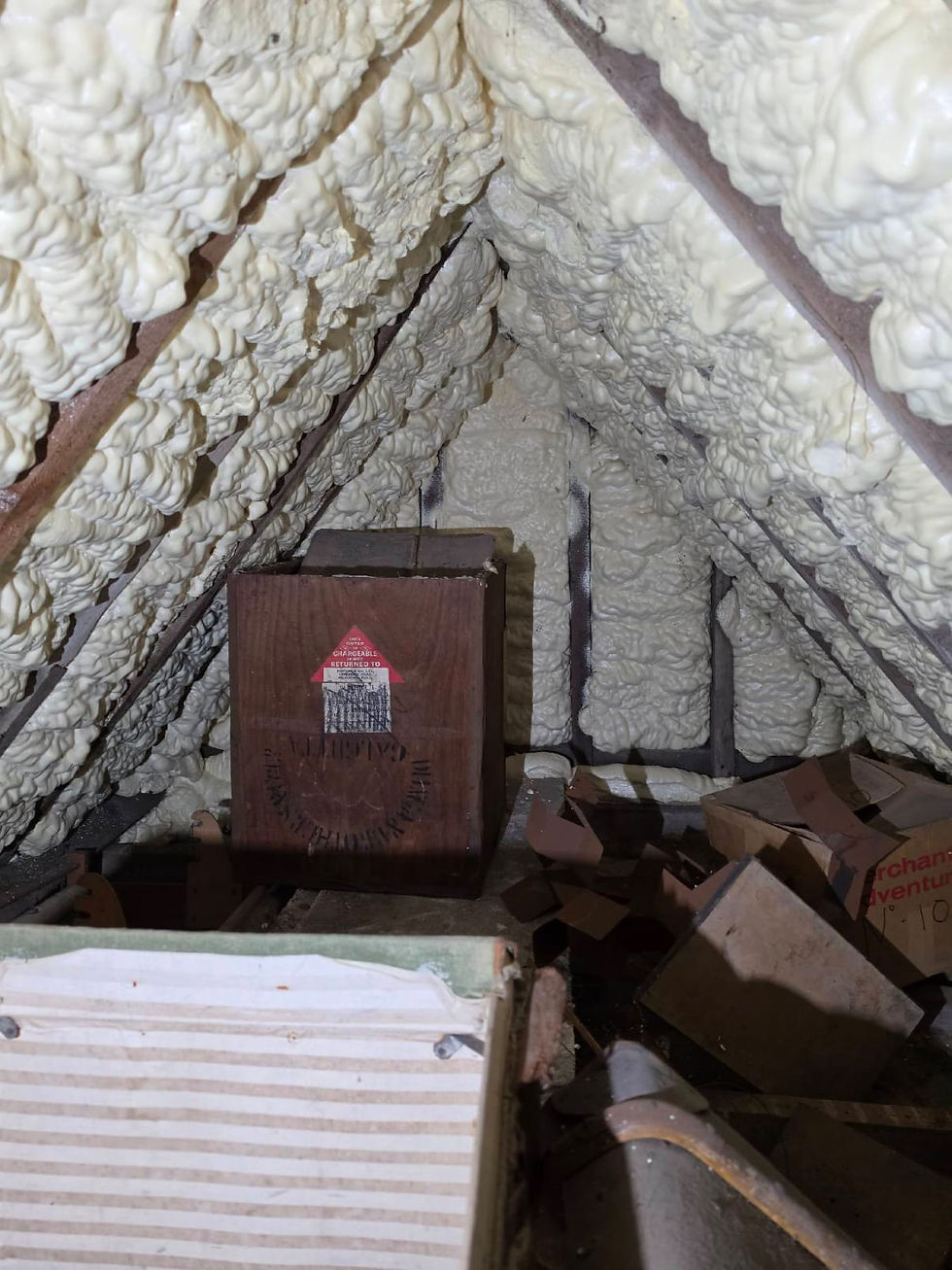
One of the most significant issues identified was the installation of spray foam insulation to the underside of the roof covering.
This is increasingly being marketed as a way to improve energy efficiency.
In reality, particularly in older properties, it can create a number of serious issues.
What actually happens when spray foam is installed
Spray foam expands and bonds directly to the underside of tiles or slates.
In doing so, it:
Blocks the natural ventilation path within the roof void
Prevents moisture from escaping
Traps moisture directly against timbers and roof coverings
Physically adheres to the structure, making removal extremely difficult
This creates a sealed environment within a structure that was never designed to be sealed.
Over time, this can lead to condensation forming within the roof space. That moisture then has nowhere to go.
The risk is not immediate failure.
The risk is slow, concealed deterioration.
Timbers can begin to decay. Fixings can corrode. Roof coverings can degrade from the underside.
And crucially, none of this is visible without invasive inspection.
If you are unsure whether this is present in a property, this is something specifically assessed during a Level 3 survey for older properties.
Why lenders are concerned about spray foam insulation
This is where things become very real for buyers.
Spray foam insulation is now widely flagged by mortgage lenders.
The reason is simple.
Once installed, it prevents a proper inspection of the roof structure.
Lenders are effectively being asked to lend against something they cannot fully assess.
In many cases:
Lending may be refused
Additional specialist reports may be required
Conditions may be imposed on the mortgage
Even if a purchase proceeds, this issue often comes back around at resale.
Cement pointing: a slow but damaging change
Another issue identified was the use of cement based mortar in place of traditional lime mortar.
This is one of the most common inappropriate repairs seen in older buildings.
In the inspection, sections of the wall had been repointed using cement, which was noted as not appropriate for this form of construction
Why this causes problems
Lime mortar is soft and breathable.
It allows moisture to pass through and evaporate.
Cement mortar does not.
Instead, it creates a barrier.
Moisture becomes trapped within the wall and is forced into surrounding materials.
Over time, this can lead to:
Dampness internally
Decay of embedded timbers
Breakdown of brick or stone faces
Loss of structural integrity in extreme cases
What makes this particularly problematic is that it often looks like a good repair.
It is neat, uniform and solid.
But technically, it is working against the building.
External defects leading to internal damp
One of the key findings across the inspections was the relationship between external defects and internal moisture.
In one case, the external render had deteriorated to the point where it was no longer performing its protective function.
Cracking, detachment and inappropriate finishes were allowing water to enter the structure.
Internally, this was already presenting as dampness.
As outlined in the report, the source of moisture was linked back to defects within the external envelope, including inappropriate repairs.
This is a critical point for buyers.
Damp is often treated internally.
Painted over. Re plastered. Covered up.
But unless the external cause is addressed, it will return.
Quick fixes that create bigger problems
Another recurring theme was the use of inappropriate materials as quick fixes.
Expanding foam had been used in multiple areas, including within wall junctions and to pipework connections.
The report notes that this is not a suitable material as it traps moisture and can conceal underlying defects.
This type of repair often indicates that:
The underlying issue has not been properly addressed
Access has been avoided rather than investigated
The condition of the structure behind is unknown
In many cases, these areas need to be opened up completely to understand what is actually happening.
Why this matters when buying an older property
The challenge with these types of defects is that they are rarely obvious during a viewing.
In fact, they often sit behind what appears to be a well maintained property.
However, as identified in the overall assessment, these types of issues can result in ongoing maintenance requirements and targeted repair works rather than a straightforward purchase.
The risks include:
Hidden structural decay
Persistent damp issues
The need for specialist repairs
Higher than expected costs
And importantly, you may not just be repairing the building.
You may first need to undo previous work.
The right approach to repairing older buildings
Older buildings are not fragile.
In fact, they are often incredibly robust.
But they do require the correct approach.
This generally involves:
Using breathable materials such as lime mortar
Allowing moisture to move naturally through the structure
Maintaining ventilation, particularly at roof level
Avoiding modern sealing products such as spray foam insulation
The aim is not to modernise the building.
It is to work with how it was designed to perform.
Why a Level 3 survey is essential
These are exactly the types of issues that a standard survey can miss.
A RICS Level 3 Building Survey goes further.
It does not just identify defects.
It explains:
Why they are occurring
How different elements of the building interact
What the implications are long term
In the cases referenced above, it was the combination of observations across multiple elements that allowed the true risks to be identified.
Without that level of detail, the problems may not have been fully understood.
Final thoughts
What we are increasingly seeing is not poor maintenance.
It is inappropriate maintenance.
Modern materials are being used in older buildings without a full understanding of how those buildings function.
Spray foam insulation, cement pointing and non breathable finishes are some of the most common examples.
They are not always immediately problematic.
But over time, they can lead to more serious and more costly issues.
If you would like to discuss a property, speak to a surveyor, or arrange a building survey in Hertfordshire or Cambridgeshire, feel free to get in touch.


Comments